How to Distinguish the Quality of Corrugated Paper
Corrugated paper is a mainstay in the printing and packaging industries, widely used for manufacturing boxes, cartons, and various types of packaging containers. Its popularity can be attributed to its excellent combination of strength, flexibility, and cost - effectiveness. It serves as a reliable protective layer for products during storage and transportation across a vast array of industries, from consumer goods and electronics to food and pharmaceuticals.
Given its widespread use, the quality of corrugated paper is of utmost importance. High - quality corrugated paper ensures that products are well - protected, reducing the risk of damage during handling and transit. It also plays a significant role in brand presentation, as better - quality paper can support more vibrant and detailed printing, enhancing the visual appeal of the packaging. On the other hand, low - quality corrugated paper may lead to issues such as premature tearing, poor stacking strength, and subpar printing results. Therefore, being able to distinguish the quality of corrugated paper is crucial for any business involved in the packaging and printing processes.
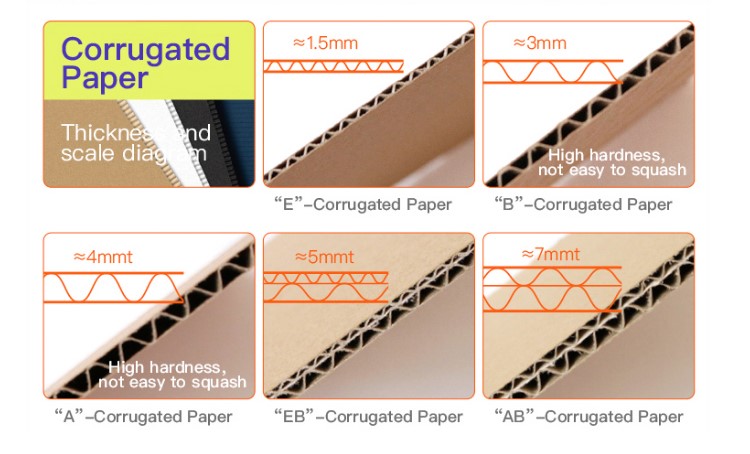
Key Factors Affecting Corrugated Paper Quality
Material Composition
The quality of corrugated paper is significantly influenced by the materials of its components, namely the face paper, core paper, and lining paper. These papers are typically made from different types of pulp, such as wood pulp, recycled pulp, or a combination of both. High - quality wood pulp - based papers generally offer better strength and durability.
There are different grades of base papers like A paper, B paper, C paper, and K paper, each with distinct characteristics. K paper, for example, has a high bursting strength and is often used for heavy - duty packaging due to its toughness. It can withstand substantial pressure without tearing easily. A paper, with a relatively high fiber quality, provides good strength and printability, making it suitable for products that require both protection and an attractive printed appearance. B paper is a more common choice for general - purpose packaging, offering a balance between cost - effectiveness and basic performance. C paper, while having lower strength compared to the others, is still useful for less demanding packaging applications where cost is a major consideration.
Weight and Thickness
The weight and thickness of corrugated paper are closely related to its quality. Generally, heavier and thicker corrugated paper has greater strength and durability. The weight of the paper is usually measured in grams per square meter (g/m²). A higher g/m² value indicates a heavier paper, which often means it can support more weight and is more resistant to tearing and puncturing.
Thickness, measured in millimeters (mm), also plays a crucial role. Thicker corrugated paper provides better cushioning and protection for the packaged items. For instance, a three - layer corrugated cardboard with a thickness of 3 - 5mm may be suitable for light - to - medium - weight products, while a five - layer cardboard with a thickness of 5 - 8mm is more appropriate for heavier or more fragile items. You can judge the weight and thickness through simple measurement tools like a weighing scale for weight and a caliper for thickness. Additionally, experienced hands can also roughly estimate these parameters by feeling the paper's heft and thickness.
Appearance and Texture
High - quality corrugated paper has distinct appearance and texture characteristics. In terms of appearance, it should have a uniform color. For example, if it's a brown kraft - based corrugated paper, the brown color should be consistent throughout without patches of different shades. It should also have a certain luster, which indicates good paper quality and proper manufacturing processes. Moreover, there should be minimal impurities visible on the surface, such as specks of dirt or un - disintegrated fibers.
Regarding texture, when you touch high - quality corrugated paper, it feels thick and firm. The cardboard should not be easily bent or deformed by gentle pressure. The corrugated ridges should be evenly spaced and well - defined, contributing to the overall strength and stability of the paper.
Water Resistance
Water resistance is a vital aspect of corrugated paper quality, especially for products that may be exposed to moisture during storage or transportation. Moisture can weaken the paper, reducing its strength and potentially causing damage to the packaged goods.
There are some simple methods to test the water resistance of corrugated paper. One way is the water - drop test. Place a few drops of water on the surface of the corrugated paper and observe how the paper reacts. If the water beads up and does not soak into the paper quickly, it indicates good water resistance. Another method is to briefly immerse a small piece of the corrugated paper in water. After taking it out, if the paper still maintains its shape and strength, it shows that it has a certain level of water - resistant ability. Some corrugated papers are treated with water - repellent coatings or additives during the manufacturing process to enhance their water resistance.
Inspection Methods for Corrugated Paper Quality
Visual Inspection
Visual inspection is the most straightforward way to assess corrugated paper quality. First, examine the overall appearance of the corrugated paper product, such as a box. Check if the box is well - formed and square. A box that is not properly shaped may indicate issues with the paper's strength or the manufacturing process. For example, if the corners are not sharp or the sides are uneven, it could be a sign of low - quality paper that is easily deformed during production.
Next, look at the printing on the corrugated paper. High - quality paper should be able to hold clear and sharp prints. Blurred or smudged printing may suggest that the paper surface is not smooth enough or has poor ink - absorption properties. This not only affects the aesthetics of the packaging but also the readability of important product information like labels and barcodes.
Finally, consider the closure of the corrugated container. If it's a box with a lid, ensure that the lid closes tightly and seals properly. A poorly - fitting lid could be due to the paper not having the right thickness or flexibility, which may compromise the protection of the packaged items during storage and transportation.
Manual Touch
Manual touch can provide valuable insights into the quality of corrugated paper. When you pick up a piece of corrugated paper, feel its weight. A heavier paper generally indicates higher - quality raw materials and greater thickness, which are both signs of better - quality corrugated paper.
Then, test the stiffness of the paper. Bend the paper slightly. High - quality corrugated paper should resist bending to a certain extent and quickly return to its original shape when the pressure is released. If the paper bends easily and stays bent, it likely has low stiffness, which means it may not provide sufficient support and protection for the products inside.
The texture of the paper can also be felt by hand. Smooth and even - textured paper is usually a sign of better manufacturing processes. Rough or uneven textures may indicate the presence of impurities in the paper or issues with the papermaking equipment. Additionally, running your fingers along the corrugated ridges, they should feel uniform and well - defined. Uneven or weak - feeling ridges can also be an indication of subpar quality.
Moisture Testing
Moisture content significantly impacts the quality of corrugated paper. High - moisture paper is more likely to be weak, moldy, and may cause damage to the products it is packaging. There are professional moisture - testing instruments available, such as moisture meters, which can accurately measure the moisture content of corrugated paper. These meters work by sending an electrical current through the paper and measuring the resistance, which is related to the moisture content.
If you don't have a professional instrument, there are some simple methods. One is the "snap" test. Take a small strip of corrugated paper and try to snap it. Dry, high - quality paper will produce a sharp snapping sound when bent quickly and breaking. If the paper bends without a snap and feels soft or soggy, it may have a high moisture content. Another method is to place a small piece of the paper in an oven at a low temperature (around 105°C) for a certain period, usually an hour or two. Weigh the paper before and after drying. The difference in weight can give you an estimate of the moisture content. The lower the moisture content, the better the quality of the corrugated paper in terms of strength and durability.
Conclusion
In conclusion, differentiating the quality of corrugated paper involves considering multiple factors. Material composition, including the type of pulp and grade of base papers, is fundamental as it determines the paper's inherent strength and durability. Weight and thickness are easily - measurable aspects that directly relate to the paper's load - bearing capacity and cushioning ability. Appearance and texture, such as uniform color, luster, and firmness, can provide quick visual and tactile clues about the paper's quality. Water resistance, which can be tested through simple methods like the water - drop test, is crucial for protecting products from moisture - related damage.
For a printing factory, choosing high - quality corrugated paper is of great significance. It not only ensures the safe transportation and storage of products but also enhances the overall quality of the packaging, which in turn promotes brand image. By using the inspection methods mentioned above, such as visual inspection, manual touch, and moisture testing, you can effectively assess the quality of corrugated paper in your daily operations. I encourage you to apply these methods consistently in your work to make informed decisions when selecting corrugated paper suppliers and products, thereby improving the quality of your printed and packaged goods and the competitiveness of your business in the market.