Exploring the Research Status and Existing Problems of Ancient Calligraphy and Painting Reproduction
This paper begins with the reproduction of Wang Xianzhi's Mid-Autumn Scroll, a cultural relic, and analyzes and compares the mainstream technologies for ancient calligraphy and painting reproduction. It elaborates on the implementation and application of color management technology in aspects such as image preprocessing, cross-platform color consistency, and software-hardware operation matching. It lists the technical difficulties to be noted in the final presentation of works and discusses the research status and existing problems in the reproduction of ancient calligraphy and paintings.
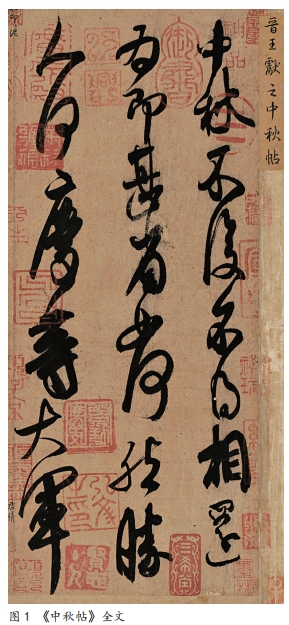
In 2019, at the "Road to Return - Exhibition of Achievements in the Return of Lost Cultural Relics for the 70th Anniversary of the Founding of the People's Republic of China" held at the National Museum of China, Wang Xianzhi's Mid-Autumn Scroll, one of the earliest and most important cultural relics returned after the founding of New China, became the focus of attention. As the relic was in a dormant period at the time, the original Mid-Autumn Scroll could not meet visitors and was replaced by a reproduction made by digital inkjet printing relying on color management technology. Figure 1 shows the full text of the Mid-Autumn Scroll. This paper will mainly explore the presentation strategies for the charm and verve of Wang Xianzhi's cursive script in the reproduction.
Regarding cultural relics
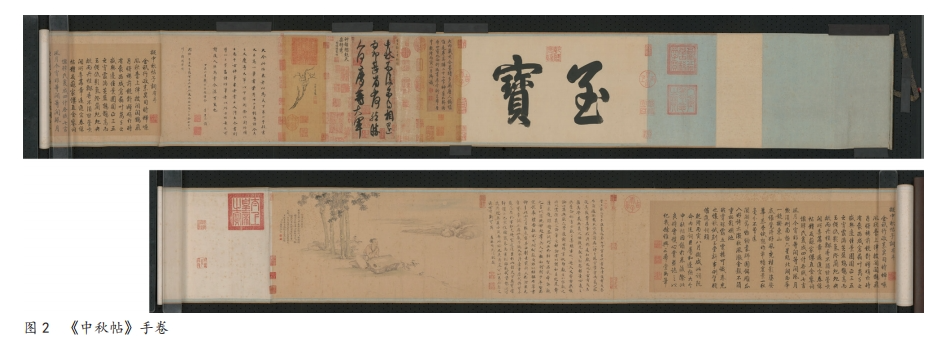
The Mid-Autumn Scroll is a calligraphy work, and the handwriting itself consists of only this single page. When re-mounted in the Qing Dynasty, seals and inscriptions from the Northern Song, Ming, and Qing dynasties were additionally paired with it, forming the handscroll we see today. Figure 2 shows a scanned image of the handscroll.
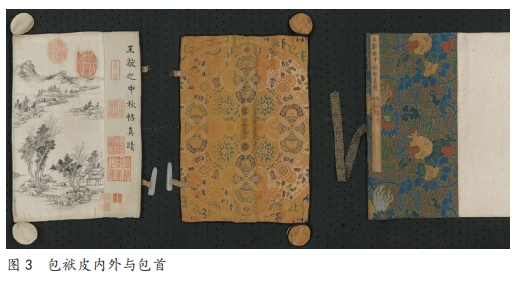
As shown in Figure 3, the entire cultural relic features a wrapping head made of grape-gray brocade with a "Three Abundances" pattern (sangduowen), primarily composed of Buddha's hand citrons, pomegranates, and chrysanthemums, symbolizing blessings, multiple offspring, and longevity. The front introductory scroll bears the inscription "Zhibao" ("Treasure") written by Emperor Qianlong. A segment of Emperor Qianlong's imperial inscription on Tibetan scripture paper adorns the front separator, while the back separator contains a plum blossom painting by Qianlong himself. The separators themselves feature decorative patterns, likely made from silk (a common material in mounting). The scroll's aftermath includes inscriptions and paintings by Dong Qichang, Xiang Yuanbian, Emperor Qianlong, and Ding Guanpeng. The handscroll is also equipped with a brocade-sewn pouch: the exterior features coin patterns, and the interior contains a landscape painting by Dong Bangda. During the Qianlong period of the Qing Dynasty, the Mid-Autumn Scroll was included in the imperial collection and collectively termed the "Three Rarities" (Sanxi) alongside the Kuaixue Shining Scroll and Boyuan Scroll.
At present, most researchers believe that this is a copied version by the Song Dynasty calligrapher Mi Fu, rather than an authentic work by Wang Xianzhi. In Qinghe Shuhua Fang (Clearing River Book and Painting Boat), written by Zhang Chou, a painting and calligraphy collector and connoisseur in the Ming Dynasty, there is a record: "The scroll of Wang Xianzhi's Mid-Autumn Scroll is stored in the collection of Xiang Zijing (Xiang Yuanbian) from Jiaxing. There is an inscription by the collector himself."
Selection of Reproduction Techniques
At present, the main techniques used for reproducing ancient calligraphy and painting relics include manual copying, collotype reproduction, woodblock watermarking, traditional printing, and digital inkjet printing.
Manual Copying
Manual copying of calligraphy is primarily carried out using the double-hooking and contour-filling methods. The specific process involves placing a wax-coated paper over the original calligraphy work, then using a small brush dipped in ink to carefully trace the outline of each stroke through the wax paper. After the stroke outlines are traced, the hollowed areas are filled with ink to match the original. This method can relatively accurately reproduce the stroke characteristics of the original relic, ensuring consistency in character shape while replicating the original layout and overall composition. However, it requires the operator to have high artistic literacy. Accurately reproducing accidental brushstrokes—such as the "feibai" (feibai, meaning "flying white," or dry brush effects) in some strokes of the original—is extremely challenging, and the process is time-consuming. Additionally, historical traces like mildew spots on (chuánshì, handed-down) works cannot be mimicked manually.
Collotype Printing
Invented in the 19th century, collotype printing is a planar printing technique that maximizes the artistic characteristics of ancient Chinese calligraphy and paintings, offering rich layers and vivid charm. The collotype process at the Shanghai Museum includes: photography—plate retouching—plate making—printing—manual color application—and seal stamping. The entire reproduction process is complex, typically using original-size printing. For large-scale works, (pīnjiē, splicing) multiple plates is required, which lacks stability and results in low efficiency.
Woodblock Watermarking
Woodblock watermarking can replicate the continuous tone effects of ancient calligraphy and paintings while preserving the original brushstrokes and charm, often achieving a near-identical appearance. The process includes: outlining and plate separation, manual block carving, printing, and mounting. High-quality reproductions often use this method. However, it has long production cycles, low efficiency, and requires high technical skill and artistic literacy from the craftsmen.
Modern Printing Technologies
Widely adopted printing technologies have provided new avenues for reproducing ancient calligraphy and paintings. For example, traditional offset printing uses four-color inks and coated materials, offering strong color (biǎoxiànlì, expressiveness) and rich layers, suitable for large-scale production at low costs—but unsuitable for small-scale customized orders. In recent years, digital inkjet printing has emerged, using 12-color pigment inks for strong gradation reproduction. It relies on digital image acquisition systems to obtain RGB images, enabling true on-demand reproduction without plate making, with fast speed and high efficiency.
Selection for the Mid-Autumn Scroll
For the reproduction of the Mid-Autumn Scroll, considering it is a calligraphy work with a relatively simple color composition, multiple inscriptions, diverse script styles, and water stains and mildew spots throughout the handscroll, the goal was to accurately convey the relic’s information and maintain maximum consistency with the original to showcase the charm of Chinese calligraphy. Ultimately, digital inkjet technology was chosen for its higher precision and stronger detail (biǎoxiànlì), ensuring the reproduction closely matches the original’s texture and historical traces.
Digital Inkjet Reproduction Process
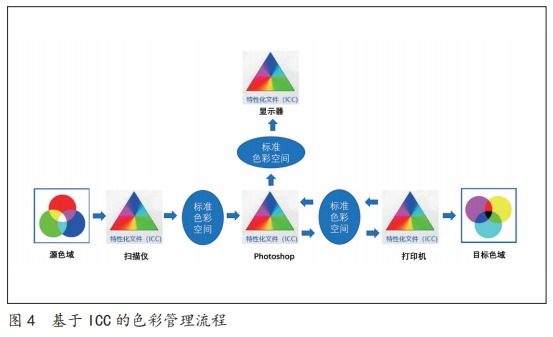
In practical work, the digital inkjet reproduction process is primarily divided into three steps: image acquisition, image post-processing, and image output and evaluation. Due to the variety of equipment required and their different performance characteristics, strict adherence to relevant color management rules is essential to ensure accurate color data and achieve the most ideal color effects on target devices relative to source devices. This means that before formal reproduction begins, equipment calibration, characterization, color conversion, and other tasks must be performed. Figure 4 shows the ICC color management process, which includes the basic steps in the calligraphy and painting reproduction workflow—from input profiles to the working space of programs like Photoshop, then to viewing images using display profiles, and finally converting to output profiles.
1. Digital image acquisition
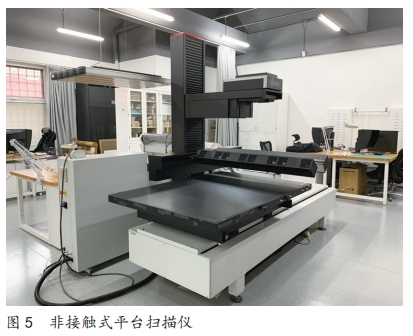
For this handscroll, data collection was carried out using a non-contact platform scanner (as shown in Figure 5). To meet the requirements of subsequent editing and output, the scanning resolution was adjusted to 600dpi to provide data redundancy.
2. Image post-processing
An original scanned image, while retaining the maximum amount of original information, often requires the staff to optimize its tone, color,
sharpness , and other properties based on factors such as image resolution, ink, and substrate, and to formulate personalized output
strategies.
(1) Selection of the printing substrate
The reproduction of ancient paintings and calligraphy is different from creation. One must strive to faithfully reflect the original in terms of
style, tone, texture, and details. Although the output characteristic files will do their best to ensure color accuracy when converting the image
from the original characteristic file space to the target characteristic file space, sometimes there will still be a certain degree of color deviation
. At this time, simply evaluating the output effect of the reproduction piece from a subjective visual perspective is not rigorous enough.
Using professional software for scientific and quantitative color comparison can provide a data basis for the selection of the printing substrate
and the formulation of the image's post-processing strategy, facilitating the tracking of the effects presented by the image on different printing
g substrates, and thus choosing the most suitable output materials.
Figure 6 shows an overview map of the representative areas within the handscroll of "Mid-Autumn Letter". This time, using Colorthink Pro,
a conversion from the starting color gamut to the color gamuts of various terminal printing materials was simulated and created. Sampling
points were monitored in 6 key areas such as paper, ink color, and seals. During the program's operation, the degree of color difference
between the images before and after color conversion was calculated pixel by pixel. Finally, the main indicator delta-E for judging the
quality of color conversion was generated. Tables 1, 2, and 3 respectively summarize the simulated color difference data of the conversion
colors under perceptible, saturation, absolute color comparison, and relative color comparison rendering strategies on three commonly used
coated paper types: domestic coated handmade paper, Hahnemuhle paper, and Innova paper. The results show that the text areas (ink color)
in the work are filled with a large amount of yellow, orange, and even red. The delta-E ranges from 9.84 to 12.26, indicating that at present,
the ink color reproduction of the printer is not ideal, as the black density is low, resulting in a large color difference.
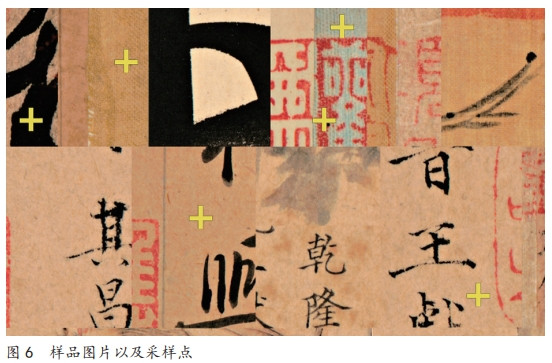
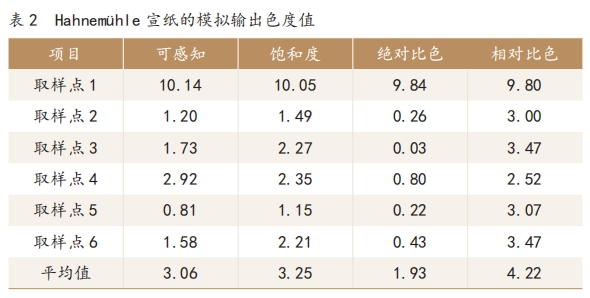
Figure 7 shows the conversion schematic of Innova artist paper under the contrast color mode. After averaging the delta-E values of each sampling point, it can be found that the minimum value occurs in the combination where Hahnemuhle artist paper is output in the absolute color mode. The value is 1.93. Although the test results show that the chromaticity values in the picture remain the best within the target color gamut after rendering in the absolute color mode, the excellence in data does not represent aesthetic correctness. Because the absolute color mode is relatively harsh for color processing strategies outside the color gamut, it will cause breaks in the originally smoothly transitioned areas of the picture, damage , and loss of picture details. Therefore, in the output of artworks, the relative color mode is more commonly used. This mode retains colors within the color gamut, compresses all colors outside the target color gamut, and maintains the brightness relationship between each pixel. With the support of the black field compensation algorithm, the restoration of details in transitional areas is more natural.
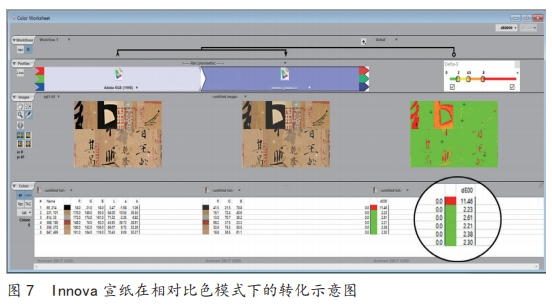
For general commercial printing, a delta-E value of 3 to 6 is usually acceptable. It is generally believed that an error less than 1.0 is usually caused by measurement errors or the limited precision of the equipment. When the delta-E exceeds 6, it is considered as color distortion. In the result of this simulation conversion, when the output is carried out using the color comparison strategy on the Innova paper, the majority of the picture area has a delta-E control within 0 to 2, and the color difference within this range is relatively small. In order to obtain the most excellent theoretical and visual conversion results, it was decided to use the Innvoa paper for the output of this "Mid-Autumn Scroll".
(2) Color Adjustment
In digital printing, usually , data conversion is carried out from a larger color gamut space to a smaller one. At this time, the soft proofing
function in Photoshop can be utilized to visually understand the color gamut reduction situation and the degree of dynamic range change.
After observation, it was found that the overall color of the scroll is warm, the vermilion-colored seal is leaning towards rose red, with low
contrast and low ink saturation. Although the copied calligraphy work this time does not have complex color composition, the solutions to
the above problems still require the use of subjective sliders such as curves, color saturation, and contrast in Photoshop to adjust the overall
and local areas of the picture.
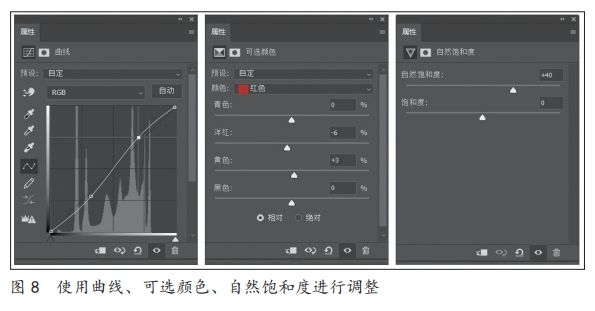
Based on previous work experience, the post-processing of images should start by adjusting the basic tonal values. While solving the basic
problems, other weaker conflicts in the picture will also be alleviated. As shown in Figure 8, in order to compensate for the low brightness and
small dynamic range of the rough paper, causing low contrast in the picture, control points were added diagonally to the adjustment panel
of the curve tool and dragged to an S shape to appropriately increase the global contrast; for the problem of the seal being slightly reddish,
the Color Range command in Photoshop was used to establish a selection area for all the seals in the picture, then the Selective Color
command was used on the selection area to reduce the proportion of magenta in the red area, and the yellow button was slightly moved
to the right to make the color of the seals in the selection area shift towards the vermilion color; then the Natural Saturation tool was used
to enhance the overall color saturation of the picture to make it more vivid, in order to counteract the excessive warm tone caused by the
yellowish paper base, making the soft proof image and the original picture closer.
(3) Sharpening
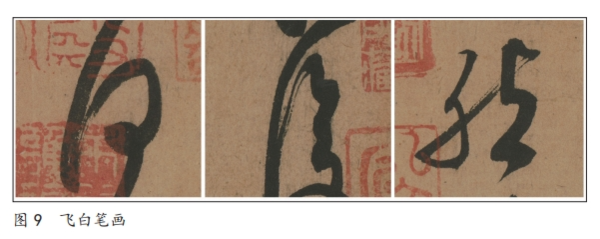
The "Mid-Autumn Festival Scroll" has a smooth and continuous brushstroke. The ink color changes from dark to light, creating a rich gradient effect. As shown in Figure 9, in the areas of "not anymore" and "however", there are a few specks of white hair in the characters, complementing the thick ink, and presenting rich details. It seems as if it can transcend the limitations of the two-dimensional paper space. However, in the process of scanning and digitizing any painting or calligraphy work, the original information inevitably becomes blurred. Direct output will seriously affect the three-dimensionality of the final image presented in the reproduction. Therefore, it is necessary to perform sharpening operations on the original scanned image.
The "USM Sharpening" filter in Photoshop is often used in the post-processing of digital printing, aiming to make the image clearer
and more textured. Ancient calligraphy and painting works contain numerous elements. Mastering the balance between image blurring
and sharpness is the key to the sharpening operation. The sharpening processing in the reproduction of ancient calligraphy and paintings
mainly consists of two levels: Firstly, the texture of the materials such as silk and paper in the work needs to be supplemented in terms of
sharpness, and then the texture of the author's handwriting needs to be restored.
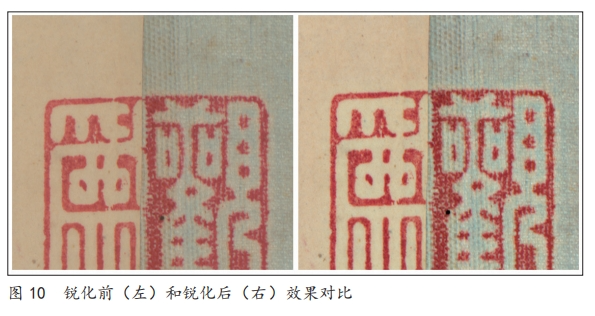
Before applying sharpening to an image, it is necessary to determine the value of the radius. The parameter of the radius determines the
size of the influence range on the image edges during sharpening. Take a piece of water-resistant fabric inside the hand roll as an example.
It is woven with warp and weft threads and has rich surface texture details, belonging to the high-frequency type of texture detail
information. A smaller radius value should be used. In Figure 10, the right picture shows the effect after applying sharpening
with a small radius value. Here, the value of the radius slider is 0.6.
In the digital reproduction of calligraphy, sharpening the main body of the handwriting is of paramount importance. It consists of two parts: the character structure and the contour edge. They are a combination of low-frequency information and high-frequency information and require two rounds of sharpening. Among them, the character structure belongs to low-frequency information. During the sharpening process, a larger radius value parameter is applied to increase the ink color of the font relatively precisely, enhancing the three-dimensionality of the character structure, and ultimately affecting the light and dark contrast between the main body of the handwriting and the paper surface. This can be regarded as a precise and localized tonal adjustment. Regarding the contour edge, the diffusion effect of ink on the paper surface and the feathering effect presented by a few strokes belong to high-frequency information. To avoid repetitive sharpening of the font structure, a mask selection area needs to be established for it.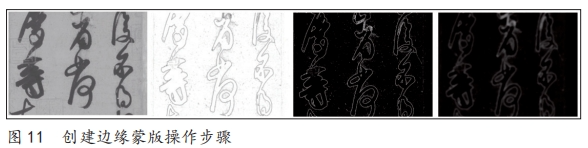
There are various processes for creating a mask. To facilitate understanding, here is a relatively simple generation method. First, select the channel panel, and choose the grayscale channel with the highest contrast among the red, green, and blue channels. After selecting the channel, run the "Stylize - Find Edges" command; then run the "Invert" command, and in the adjustment menu, run the "Levels" command. Move the black level slider to eliminate random pixels. To achieve a more uniform transition and ensure that the sharpening effect can better blend with the final image, apply the Gaussian Blur command to the mask to soften the edges. Thus, the mask is completed. Figure 11 shows the operation steps for creating a sharpening mask. With the protection of the mask selection area, relatively large post-processing adjustments can be made without worrying about negative impacts on the image quality. Figure 12 shows the comparison of the sharpening effect before and after applying a small radius parameter to the contour edge of the feathered area. Due to the protection of the mask, the sharpening operation only acts on the pen stroke edges within the selection area and does not affect the surface area, effectively avoiding repeated sharpening of the picture and avoiding loss of image quality due to excessive sharpening.
3. Image Output and Evaluation
When outputting for the first time, it is recommended to select a small section of the image and print it at the original ratio to check the final
output effect of the cultural relic image on the substrate. If conditions permit, the original and the copy should be placed on the same plane,
under the same light source, for comparison, and evaluated at two viewing distances. The first is the standard viewing distance, which is gene
rally twice the diagonal length of the work; the second is the detail viewing distance, which is the closest distance that the naked eye can
accept for observation. Since color perception is a human characteristic, the evaluation here still leans toward subjective assessment.
In practical work, the process of "output - evaluation - adjustment" may need to be repeated several times to determine the final output
parameters. The purpose is to ultimately obtain a printed work without ink overflow (or dripping), without abrasion, with accurate details
in the bright, middle tone, and dark parts of the picture, similar overall tonal gradation , and color to the original work, without obvious
color deviation, sharp picture details, and without obvious graininess or pixelation.
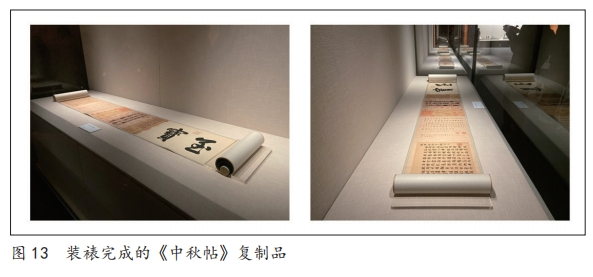
The final framed copy of the "Mid-Autumn Festival Scroll" is shown in Figure 13. Under the illumination, the handwriting is clearly visible on
the paper, with excellent tonal quality, distinct layers, and rich details. Through a series of post-processing operations, the changes in the ink
color and black-white gradient in the original work were perfectly preserved, achieving a coherent and integrated effect.
Through the use of the sharpening tool, the unique texture present at the edges of the original work has been perfectly restored. The subtle
changes in the edge contours of the original artifact have been retained to the greatest extent possible, creating a sense of fluidity in the
lines as they are drawn. At the same time, the small feathering effects present in the internal strokes of the work have been further refined
smoothly, maintaining the original visual impact. The creative ideas and connotations of the calligrapher integrated into the lines have been
perfectly presented in the reproduction.
With the rapid advancement of digital reproduction technology, the output devices, under the control of color management software,
have been able to restore the details of the original cultural relics to an almost indistinguishable level in terms of ink gradation,
the expression of thick and thin, dry and wet, and changes in light and shade. However, the inkjet-printed images of the cultural relics lack
the three-dimensionality of the pigment layer and lose the unique charm and vitality of calligraphy works. This seriously reduces the artistic
beauty of the works and provides less space for viewers to reflect on them, thereby imposing certain limitations on their understanding of
the works. Although the replicas cannot rival the original, to alleviate the contradiction between protection and exhibition in museums,
using replicas as "substitutes" for the exhibition can allow precious cultural relics to "rest" in a stable environment in the storage room,
thereby extending their "lives", which is of great significance for cultural protection. At the same time, as a supplementary display, replicas
can also achieve a similar effect to the original works for the public to understand historical knowledge and improve artistic appreciation.
The current replication methods and plans are all temporary and there is no one set, all-encompassing, and universally applicable production
process. Among the various methods, there is no distinction between right and wrong. If a replica can provide users with a good experience
or be fully utilized, it indicates that it is a successful replication. It is believed that with the advancement of science and technology, more
solutions will be found to address problems, and the production of cultural relic replicas will also become increasingly refined.