A Complete Guide to 7 Printing Processes for Designers
For designers, mastering printing processes is critical. It directly determines how your design will look in physical form. Knowing these processes helps you pick the right printing method, guarantee accurate color and detail reproduction, and avoid unexpected defects in finished products. It also supports cost optimization, shorter lead times, and smoother communication with printers — a core professional skill for every designer.
This guide covers the principles, workflows, key features, and common applications of screen printing, gravure printing, UV printing, offset printing, digital printing, heat transfer printing, and foil stamping.
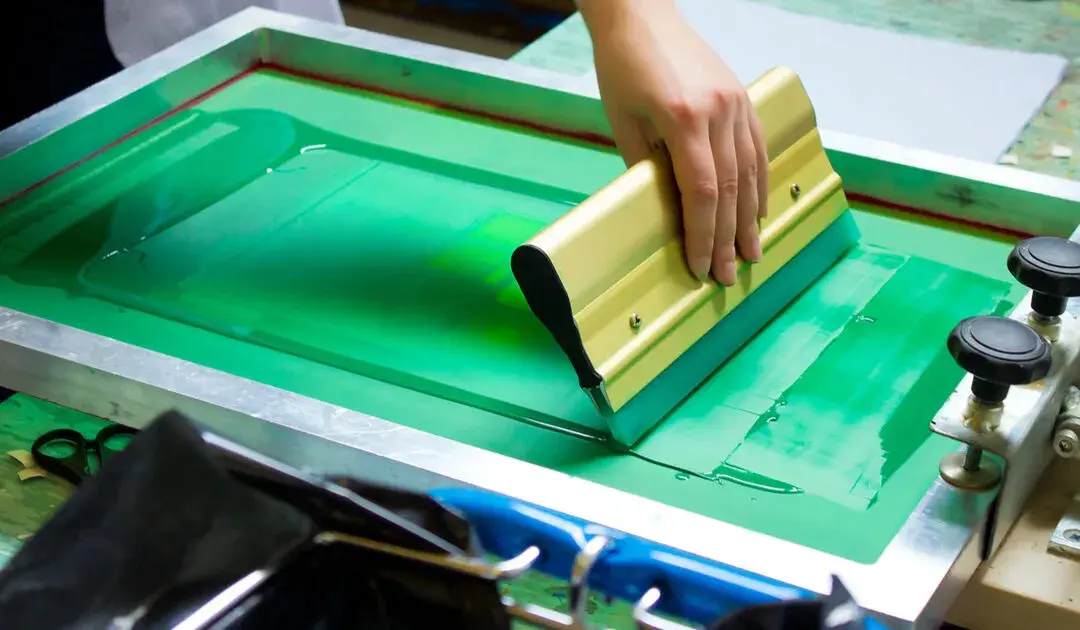
1. Screen Printing
Basic Principle & Workflow
Screen printing is a stencil printing technique. A fine mesh screen acts as the printing base. A photosensitive stencil is created on the screen: ink can pass through open mesh areas for graphics, while non-image areas are blocked. During printing, a squeegee squeezes ink through the open mesh and transfers the pattern onto the substrate.
Standard workflow:
Prepare the screen frame and photosensitive emulsion; clean and degrease the frame.
Expose the film positive and emulsion under a UV light source inside a vacuum exposure unit.
Develop the screen: soak the emulsion in warm water, and spray to wash away unexposed, soluble areas.
Laminate the exposed and developed stencil film firmly onto the screen mesh.
Dry the screen in an oven; the screen is ready for printing.
Features & Applications
Screen printing works on nearly all surfaces: flat, curved, spherical, and uneven substrates.
Ink layer thickness: typically up to 30 μm, delivering strong texture and opacity.
Vivid color output and excellent lightfastness, suitable for outdoor signs and long-term displays.
Flexible print sizes: supports extra-large formats and tiny, high-precision specialty parts.
Simple equipment and operation, compatible with manual hand-printing and automated mass production.
Common uses: glass packaging markings, plastic packaging, metal containers, paper packaging, ceramic decoration, apparel prints, nameplates, and circuit boards. Known as the “king of decorative printing”, it is one of the most versatile printing methods available.
2. Gravure Printing
Principle & Features
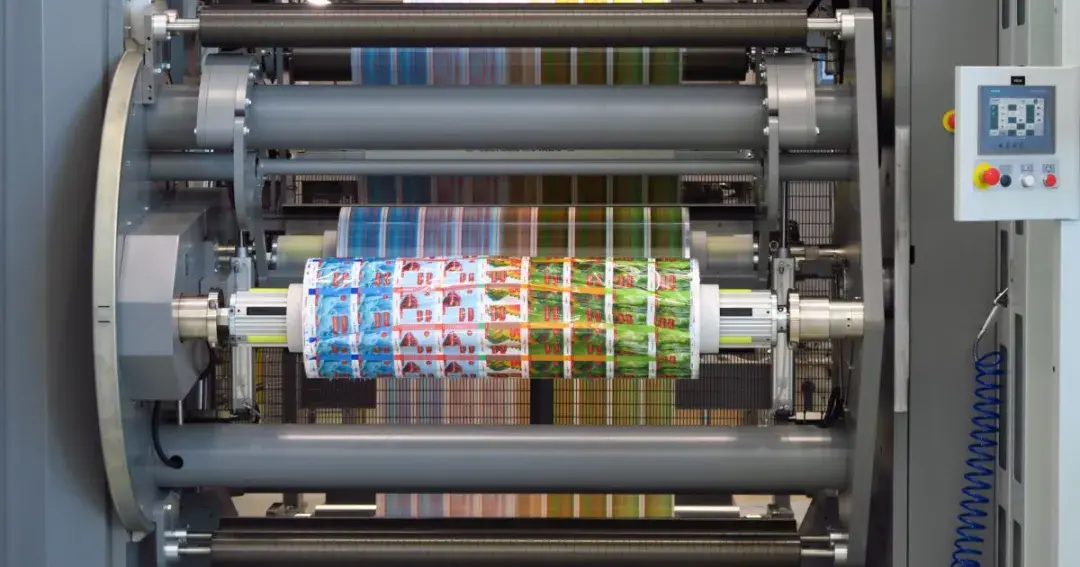
Gravure printing is a direct printing process. The graphic elements are recessed engraved cells on the cylinder. These cells hold ink, while the surface non-image areas are wiped clean by a doctor blade. Under printing pressure, ink trapped inside the recessed cells transfers onto the substrate.
Key advantages:
Thick ink deposits (20 μm and above), rich, saturated colors, and strong visual depth.
Extremely long press run life; cylinders can withstand millions of impressions, ideal for long-run production.
Supports continuous high-speed web printing.
Outstanding anti-counterfeiting performance, as fine engraved patterns are hard to replicate.
Compatible with paper, plastic films, metal foils and other flexible substrates.
Applications
Widely used for flexible food packaging, cartons and labels, decorative wallpaper, industrial decorative films, banknotes, stamps and securities. Although cylinder engraving incurs high upfront costs, the unit cost drops sharply for large-volume orders, making gravure highly competitive for long-run jobs.
3. UV Printing
UV Ink & Curing Mechanism
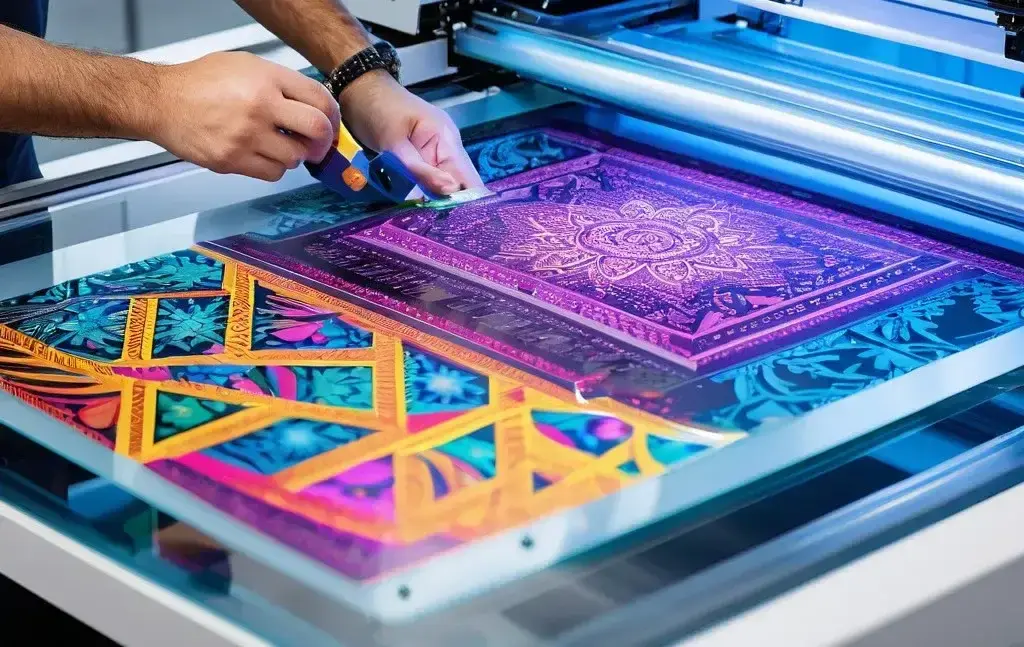
UV printing relies on UV-curable inks and photochemical curing. UV ink consists of oligomers, reactive monomers, photoinitiators, and pigments. When exposed to ultraviolet light, photoinitiators trigger an instant polymerization reaction, turning liquid ink into a solid dry film.
Curing factors: UV light intensity, wavelength, ink film thickness, and substrate light transmission. Common UV light sources: mercury lamps and energy-saving LED UV lamps. Cooling systems include fan cooling and water cooling.
Advantages & Limitations
✅ Strengths
Instant curing, no waiting time, greatly boosting production efficiency.
Low VOC emissions, more eco-friendly than solvent-based inks.
Works on both absorbent and non-absorbent substrates.
High gloss, scratch resistance, and chemical resistance.
No powder spraying or lengthy drying tunnels required, saving factory space.
❌ Limitations
Higher cost for UV ink and curing hardware.
Strict temperature and humidity controls are required for stable results.
Curing shrinkage may create internal stress and affect adhesion on certain plastics.
UV lamps have limited service life and require regular replacement.
Color saturation may fall behind traditional solvent inks on some materials.
UV printing is widely adopted in packaging and premium commercial printing, and continues to grow with advancing LED UV technology.
4. Offset Printing
Principle
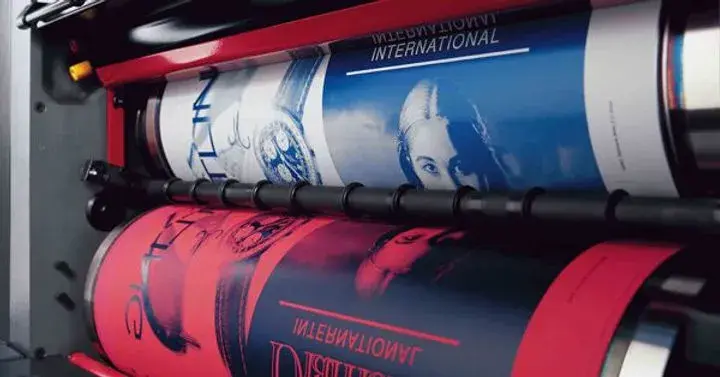
Offset printing, also called lithography, is an indirect printing method built on the principle of oil-water repellency. The graphic and blank areas sit on the same flat plate surface: image areas are oleophilic (ink-attracting), blank areas are hydrophilic (water-attracting).
First, dampening rollers apply fountain solution to the non-image areas. Inking rollers then supply ink only to the graphic sections. The ink transfers from the plate cylinder onto a rubber blanket cylinder, then is offset onto the final substrate.
Quality Control & Applications
Critical quality controls: printing pressure, ink-water balance, registration accuracy and color management. Paper absorbency and surface finish also affect the final print result.
Main applications: food, cosmetic and pharmaceutical packaging, books, magazines, brochures, posters, business stationery and high-end commercial print runs. Offset delivers sharp details and consistent color at low unit cost for medium-to-large paper-based orders.
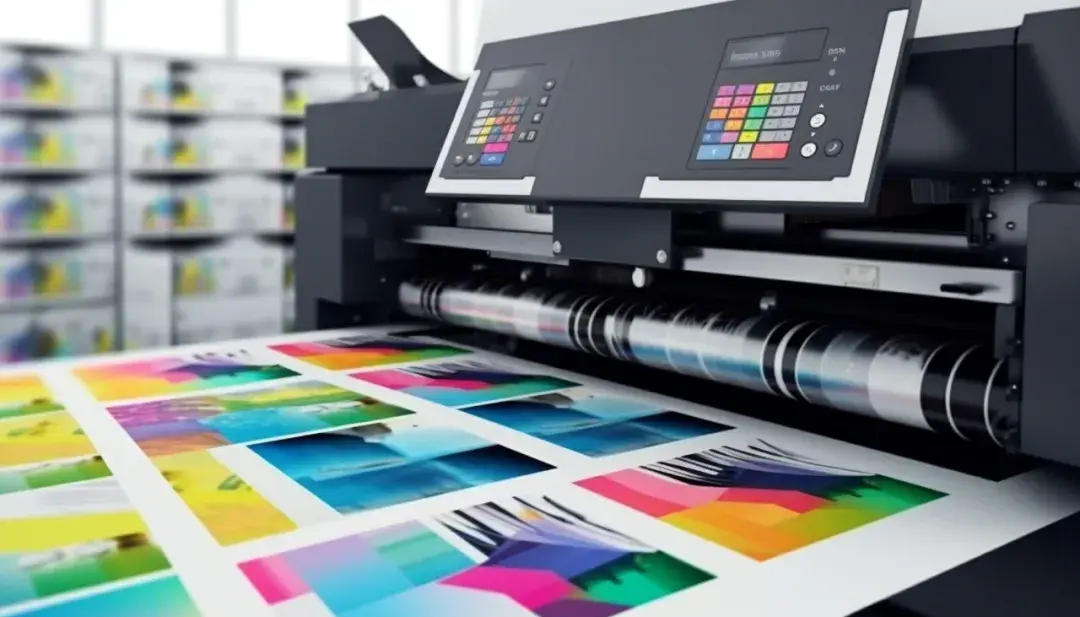
5. Digital Printing
Core Features
Digital printing sends artwork directly from a digital file to the press, with no traditional plate-making required.
Variable data capability: every printed piece can carry unique content, such as custom QR codes, serial numbers, or personalized names.
On-demand production, fast turnaround for rush jobs.
Economical for short runs and sample printing.
Integrated color management systems maintain consistent color.
Less chemical waste and wastewater, more environmentally friendly.
Applications & Market Trends
Common use cases : custom gifts, personalized albums and greeting cards, bespoke brochures, custom labels, short-run publications, and limited-edition packaging.
Driven by rising consumer demand for customization, online print services, and faster digital press speeds, digital printing is becoming increasingly popular for short-run, personalized print jobs.
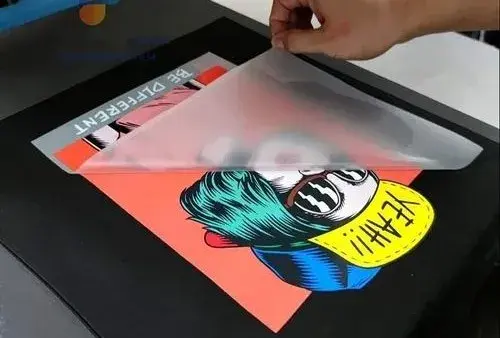
6. Heat Transfer Printing
Two Main Types
Sublimation Transfer: Sublimation dyes are printed onto special transfer paper. Under high heat and pressure, solid dyes turn directly into gas, penetrate into polymer fibers of the substrate and become part of the material.
Heat Transfer Film / DTF Transfer: Patterns are printed on PET film coated with hot-melt adhesive. Heat and pressure bond the graphic layer and adhesive onto the surface of the target material.
Workflow
Print the artwork onto transfer paper or PET film.
Set the heat press to the correct temperature and pressure.
Align the transfer sheet with the substrate.
Apply heat and pressure to transfer the image.
Cool down and peel off the carrier film to finish.
Features & Applications
Heat transfer delivers bright, high-fidelity graphics and good wash and abrasion resistance. It works for textiles, plastic, metal, ceramic and promotional goods. Typical uses: custom apparel, mugs, tiles, electronics casings, banners, industrial warning labels and anti-counterfeit marks. It is flexible and well-suited for small-batch customization.
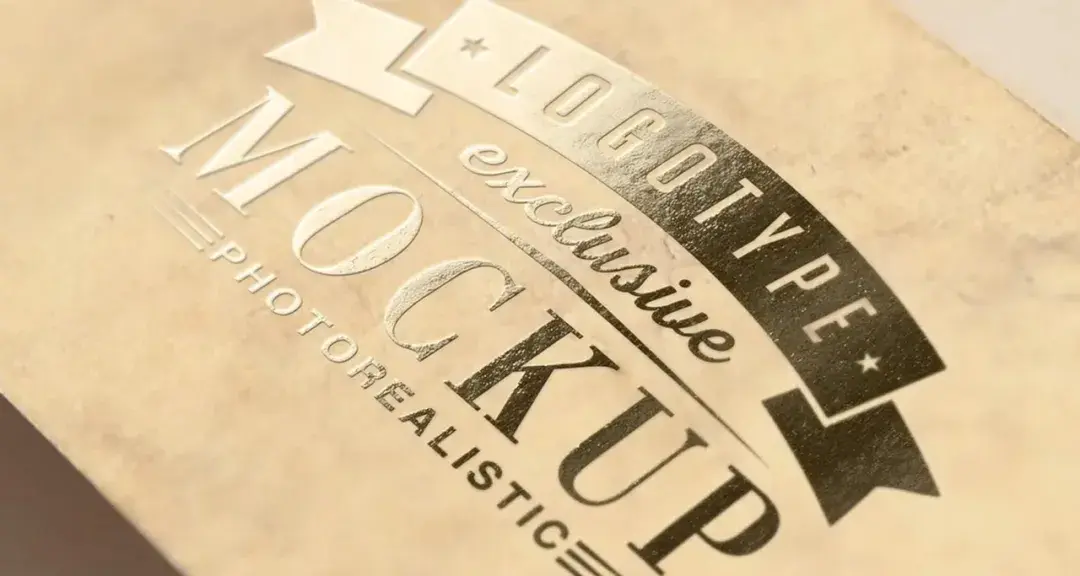
7. Foil Stamping (Gold / Silver Hot Stamping)
Process & Materials
Foil stamping is a premium decorative process that transfers metallic foil onto substrates using heat and pressure. Workflow:
Etch or engrave a metal stamping die according to the design.
Position the multi-layer hot stamping foil over the substrate.
Apply controlled heat and pressure with the stamping machine.
Cool the stock and peel away the carrier film, leaving the metallic pattern.
Hot stamping foil structure: carrier film, release layer, color layer, vacuum-metallized aluminum layer , and adhesive layer. Compatible substrates include paper, plastic, leather, and fabric.
Effects & Applications
It creates a distinctive metallic luster, subtle embossed texture, and luxury visual effect. Special security foils can support anti-counterfeiting.
Common applications: luxury packaging for cosmetics, wine and tobacco, hardcover book covers, premium invitations, certificates, high-end business cards, apparel labels and consumer electronics decoration. Cold foil stamping is a newer variant, offering faster speeds and better environmental performance.
Final Summary
For designers, understanding printing processes is essential to bridge digital design and physical finished products. Each process has its own strengths and limitations. Choosing the right printing method helps you realize your creative vision as intended.
Different printing techniques impose unique requirements on substrates, color modes, and resolution. Adjusting your artwork at the design stage prevents color shift, blurriness, or distortion after production. For example, screen printing excels at thick, tactile solid-color graphics on apparel and packaging; gravure printing produces smooth, rich gradients for flexible packaging.
With proper knowledge of processes like foil stamping and UV printing, designers can add striking visual effects while staying within budget and timeline. Mastery of printing technology improves your design professionalism and helps your ideas land successfully.
SEO Notes (Google-friendly, embedded naturally, no stuffing):
Target keywords: screen printing, gravure printing, UV printing, offset printing, digital printing, heat transfer printing, foil stamping, hot stamping, printing process guide for designers
Tone: practical, instructional, clear for printing buyers & graphic designers
Structure: H1 main title, H2 process headings, bullet-style feature lists, logical opening & closing, simple plain English (avoid overly academic jargon)